What No One Tells You: My Life After Cancer – The Good. The Bad. & The Ugly
Therese (Mom)
The good, the bad, and the ugly.
Let’s start with the ugly — because I like to end on a high note. The good deserves to be last.
The Ugly
First and foremost, what they don’t tell you is this: never go to an appointment where you’ll receive test results alone.
When I showed up to my first-ever biopsy results appointment, I was 24 — full of optimism, completely unaware of what was about to happen. I went in thinking it was a routine check, maybe something minor.
The doctor told me I had cancer. Hodgkin’s Lymphoma.
It’s important to really hear test results because you need to understand what comes next, but at that moment, I couldn’t hear anything. You go into a sort of fog — a bad news bubble — where the words float around you, but none of them make sense.
I left the office, started my car, and drove maybe a block before I broke down sobbing. Reality hit hard. I lost all control and had to pull over. Someone had to come get me and drive me home.
That’s something else no one tells you: cancer doesn’t just happen to you — it happens to your family, too.
The first time, my eldest daughter was only a year and a half. She’ll never remember that time, thankfully. But the second time — when I was diagnosed with breast cancer — my younger daughter was twelve. That time was harder. Can you imagine being twelve and not knowing if your mom is going to live or die?
And yet, life keeps moving. She still had to go to school, do homework, laugh with friends — as if everything was normal. Everyone around you bottles up their fear, their anger, their what-ifs, just to keep you afloat.
Please remember this — and it’s very important:
If your child, spouse, or partner blows up or becomes angry during your illness, it’s not your fault and it’s usually not directed at you.
Sometimes caregivers don’t have outlets for their fear. It surfaces as anger, and yes, it can get ugly. However, know that behind it, there is love and helplessness. The strange part? I was never afraid for myself.
Deep down, I always believed I’d be okay.
“I was never afraid for myself.”
The Bad
No one warns you about the endless cycle of “hurry up and wait.”
You rush to appointments to be fifteen minutes early, only to be stripped of your clothes (and sometimes your dignity), left sitting in a freezing room for what feels like forever. The fear and anxiety creep in and the four walls of the exam room come closer and closer together until, FINALLY, someone walks in to assist you. Seconds and minutes feel likes hours and days.
And why is it that the scale always comes first? I get it — weight matters in treatment — but come on. I was going through chemotherapy; I had no control over my body. Couldn’t I just get a little bit of grace?
I learned the hard way: choose a doctor with great bedside manner.
I’ll always be grateful to the doctor who saved my life the first time, but he once told me I was gaining too much weight and should “starve myself.”
To this day, I’m still not sure if he was joking or not, but let’s just say humor has its limits when you’re fighting for your life.
The Good
Now for the part that makes all the rest worth surviving.
You will encounter love and kindness in ways you never imagined. Family, friends, coworkers — yes, but also people you’ve never met. People who will remind you that humanity can be breathtakingly beautiful.
One day, I came home from treatment and found a single rose in a vase on my porch. A note leaned against it: “I’m praying for you.”
No name. No clue who it was from. Just quiet compassion that reached right into my soul. I still think about that rose.
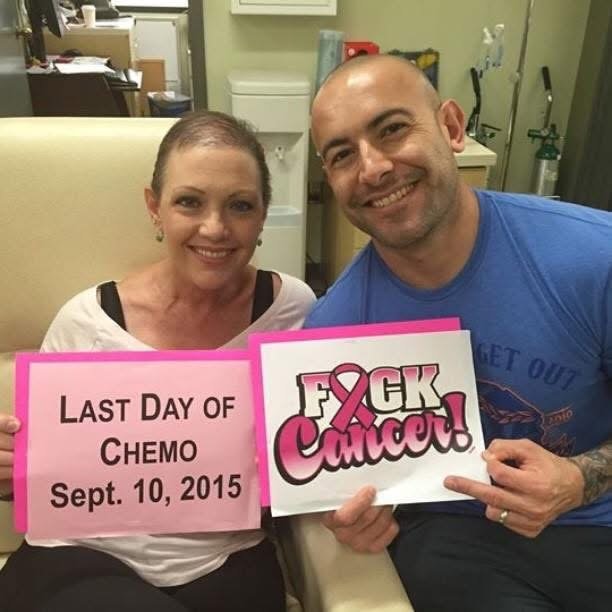
Another time, my husband and I went out to dinner after chemo. I was bald, pale, and tired — the picture of someone in recovery. When the bill came, the waitress told us it had already been paid. A woman, also a survivor, had quietly told her she wanted to “pay it forward.”
I never met her, but I will never forget her.
What I Know Now
Cancer changes everything — your body, your family, your patience, your limits.
But it also changes the way you see people.
You learn that kindness can show up on your doorstep, or in a restaurant, or in the way someone simply says, “I’m here.”
You learn that survival isn’t just about living — it’s about remembering why life is worth fighting for in the first place.