How Do I Want to Feel Tomorrow? Learning What My Body Needs to Heal
Therese (Mom)
For most of my life, I didn’t spend a lot of time thinking about what food was actually doing inside my body. I ate because I was hungry, because something tasted good, because we were celebrating, or because I was stressed, tired, or bored. Food was food. Of course, I knew some things were healthier than others, but I don’t think I truly considered the connection between what I ate and how I felt.
It wasn’t until I started healing from my last bout with cancer that I really began analyzing what I was putting into my body. After everything my body had been through, I became much more curious about what I could do to support it. I started reading about gut health, inflammation, protein, fiber, hydration, muscle, sleep, and the ingredients in the foods I was eating. I wasn’t looking for a miracle cure, and I certainly don’t believe food can prevent or fix everything that happens to us. I simply wanted to understand my body better and figure out what I could do to help it feel as good as possible.
And trust me, I had plenty of motivation to figure it out because I deal with feeling inflamed almost every day. There are mornings when I wake up and can immediately tell that my body isn’t happy. The more attention I paid, the more I began noticing that certain foods, habits, and choices seemed to affect how I felt.
How Do I Want to Feel Tomorrow?
One of the biggest things I’ve learned is that I need to stop thinking only about how something is going to taste right now and start thinking about how I want to feel later. For me, what I eat determines everything when it comes to how my body functions.
The wrong foods make me tired. And when I say tired, I don’t mean that I could use an extra hour of sleep. I’m talking about the kind of fatigue that interferes with my ability to function normally. Things I would ordinarily do without thinking can suddenly feel like work. My motivation disappears, my patience gets shorter, and even going for a walk can feel like a chore. That’s when I get frustrated because there are so many things I still want to do.
I want to work and write. I want to take care of my home. I want to walk, travel, spend time with my family, and still have enough energy at the end of the day to enjoy my life. When fatigue starts taking those things away from me, it becomes more than an inconvenience. It affects my quality of life, and that matters to me far more now than it did when I was younger.
For years, so much of my thinking about food was connected to weight. Will this make me gain weight? How many calories are in this? How much do I need to lose? Now, although I would certainly like to lose some weight, I’m much more interested in waking up feeling good. I want energy. I want my body to move without everything feeling difficult. I want to feel capable and strong. So the question I’m trying to ask myself more often isn’t whether something will make me gain weight. It’s simply, How do I want to feel tomorrow?
Once I began making connections between what I ate and how I felt, reading food labels became much more important to me. I started noticing how much added sugar and how many highly processed ingredients were hiding in foods I had eaten for years without thinking twice about them. I also started questioning foods that were marketed as “healthy” and realizing that I needed to look beyond the claims on the front of the package.
I became more aware of the oils used in packaged and restaurant foods, too. Seed oils such as soybean, corn, canola, sunflower, and safflower oils are incredibly common. There is a lot of conflicting information surrounding seed oils and inflammation, and the scientific evidence doesn’t support saying that seed oils automatically cause inflammation in everyone. For me, learning about them became part of a much bigger lesson: I wanted to know what was actually in the food I was eating rather than assuming something was healthy because the package told me it was.
I’m not interested in becoming afraid of food or obsessing over every ingredient. I simply want to eat more whole and minimally processed foods when I can, read labels, and notice how my own body responds. After everything my body has been through, I feel like the least I can do is give it some thought before automatically putting something into it.
Menopause Changed the Rules Again
Then there is menopause, which added an entirely different layer to all of this. Losing weight now feels very different than it did when I was younger. My body composition has changed, and weight that once might have come off fairly easily seems much more determined to stick around. Things I could get away with in my twenties, thirties, and even forties don’t necessarily work the same way anymore.
For years, I think many of us were conditioned to believe that being healthy meant eating less and weighing less. We were constantly trying to shrink ourselves. Now I’m realizing that at this stage of my life, I need to think beyond the scale. I need to think about maintaining muscle, protecting my strength, staying mobile, and doing what I can to remain active and independent as I get older.
That has changed the way I think about food, too. Instead of automatically trying to figure out how I can eat less, I’m trying to make sure I’m giving my body enough of what it actually needs. I’m paying more attention to protein, fiber, vegetables, hydration, and foods that leave me satisfied and energized. I’m beginning to understand that nourishing my body and restricting my body are two very different things.
I don’t just want to be smaller. I want to be strong enough to carry my own groceries, get up off the floor—because sometimes it’s really hard—walk for miles, travel, work, and continue doing the things I enjoy. I want to be able to say yes when someone asks me to go somewhere instead of wondering whether I’ll have enough energy. I want my body to serve me well for the years ahead, and at this point in my life, that feels far more important than fitting into a particular size.
Why I Created the 42-Day Journey
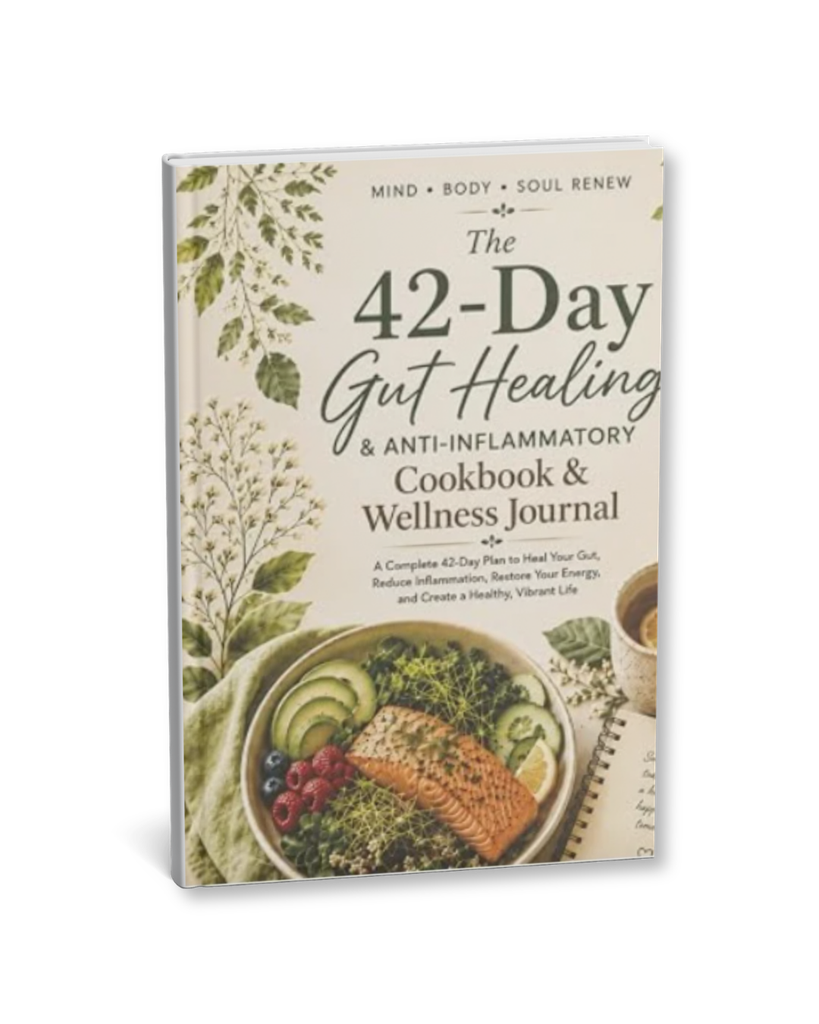
All of these lessons are really what led me to create The 42-Day Gut Healing & Anti-Inflammatory Cookbook and Wellness Journal. The more I learned, the more I wished I had everything I was discovering in one practical place. I didn’t want another restrictive diet or another book telling women everything they were doing wrong. I certainly didn’t want to promise that following a plan for six weeks would magically transform anyone’s body.
What I wanted was something that could help us slow down long enough to learn about ourselves. The six-week journey includes meal ideas, healthy snacks, grocery guidance, gut-friendly and anti-inflammatory food choices, wellness information, journaling and reflection pages, hydration reminders, movement ideas, meal-prep guidance, and other tools I’ve found helpful while learning to take better care of myself.
The journal component became especially important to me because sometimes we don’t recognize patterns until we start writing things down. Maybe you realize certain meals leave you feeling energized while others leave you exhausted. Maybe you discover you’re not drinking nearly as much water as you thought you were. Maybe you’re not getting enough protein, or you notice that you’re reaching for food every night when what you’re really craving is comfort and a way to decompress after a long day.
Those little discoveries are important because they help us understand our own bodies instead of constantly following someone else’s rules. Forty-two days isn’t going to make anyone perfect, and that’s not the purpose. It’s simply an opportunity to spend six weeks learning, experimenting, and hopefully creating a few habits that continue long after the 42 days are over.
I Want to Feel Good While I’m Living
Cancer changed the way I think about being alive. I am incredibly grateful for every year I get, but I’ve also realized that I don’t simply want more years. I want to feel well enough to enjoy them.
I want the energy to spend time with the people I love and the strength to remain active and independent. I want to take a walk without feeling like I’m dragging myself through it. I want to work, write, travel, laugh, create, and participate fully in my own life. There are still so many things I want to experience, and I want to take care of this body so it can carry me through as many of them as possible.
That’s ultimately why I’m learning so much about food and my body now. It’s not about chasing the body I had when I was 25, and it’s definitely not about eating perfectly for the rest of my life. I’m still going to have dessert. I’m still going to snack in front of the TV sometimes. I’m still going to go out to dinner, celebrate birthdays, enjoy holidays, and occasionally eat something knowing full well that I might not feel fantastic afterward.
The difference is that now I’m trying to make those choices with a little more awareness. Before automatically reaching for something, I’m learning to ask myself one very simple question: How do I want to feel tomorrow? Sometimes the answer won’t change my decision at all, and I’ll eat the cookie anyway. But sometimes it will remind me that the few minutes of enjoyment I’m looking for right now may not be worth spending tomorrow feeling exhausted and uncomfortable.
And that question means more to me today than any number on a scale ever could.
If you’re also trying to understand what makes your body feel better, I created The 42-Day Gut Healing & Anti-Inflammatory Cookbook and Wellness Journal to help you begin that process. It’s available now on Amazon!
At this point in my life, I don’t want to eat a certain way simply because I want to look better. I want to take care of the body that has carried me through some incredibly difficult things and is still carrying me today. I want to nourish it, strengthen it, and give it what it needs so that I have the energy to enjoy the people I love and the life I’m so grateful to still be living.
Maybe that’s what healing looks like for me now—not perfection, but learning to take better care of the body that fought so hard to keep me here.